
Come and join us at 10:30am to hear of the progress of the gospel among a needy people.
Come and join us at 10:30am to hear of the progress of the gospel among a needy people.
When Peter got up to preach at Pentecost, it was his first time ever! Luke records a summary of his sermon in Acts 2:14-41 which only takes up about 7 minutes, and yet it is chock full of Old Testament quotes that had found their fulfillment in Pentecost’s events. The sermon is also clearly Christ-centred, explaining the purpose of God behind his death and resurrection, and entreating his hearers to believe the gospel and receive the promises of God – for those who believe and also for their families.
Message
Outline
• My first sermon
• The setting of Peter’s message
• A ‘very good’ sermon!
• See how Luke tells us of …
A powerful seven-minute journey
Salvation
Being bold

Many people can tell you what the Parable of the Good Samaritan is all about and what Jesus was teaching by it. However, many people can also take the parable in a rather simplistic fashion which makes it all sound ‘nice’, even sort of ‘ a good thing to do’. But Jesus meant so much more by this parable that is recorded in Luke 10:25-37 which follows a long section in which Jesus has been shaping and forming the minds and hearts of His disciples. In that sense, the parable therefore means far more that many might have thought!
Message
Outline
The thirty-second in this series
This unsafe world
The law of God
The One who was truly ‘good’

While much of Luke 9 has been about the theme of discipleship, Luke 10:1-24 continues to follow that theme. When Jesus enlarged the number of His disciples from 12 to 72 (6 times as many!) and sent them out to represent Him wherever they went, this was a major challenge for each of them. They were to rely on Him, even though He was not physically with them, and yet the result of their witness was not only joy, but also confirmation of His victory over the evil one.
Message
Outline:
• The thirty-first in this series
• Those errant 12…
• Imperfect but still used!
• See how Luke tells us of …
A story from the life of Genghis Khan
Jesus sent by the Father
Workers in the harvest field – sent by Jesus
The whole chapter of Luke 9 seems to be about discipleship and this is confirmed by the finanl paragraph of the chapter, Luke 9:57-62. here, Jesus meets people who ‘would-be’ His disciples – people He asked to come and follow Him, and those who were ‘wannabe’ disciples – those who came up to Him and said they would follow Him of their own accord. To both groups of people, Jesus gave some very telling and strong demands about discipleship. It’s never to be taken lightly, but involves cost and sacrifice and letting go of many things.
Message
Outline
• The thirtieth in this series
• Jesus training the 12…
• New applicants!
• See how the disciples of Jesus need to let go of …
Australian Idol
What became of these would-be followers?
John Newton’s story

The 12 disciples of Jesus were certainly a mixed bag – hot one day (think Peter saying ‘You are the Christ) and cold the next (think their argument on the road to the cross as to which of them was the greatest!). In Luke 9:46-56 it seems that some pettiness in their minds and hearts came to the fore and out of their mouths. Jesus must have felt burdened that they were so off the mark – just like we can also be. Thanks be to God that He wasn’t, but came ‘not to be served, but to serve and give His life a ransom for many’!
Message
Outline
• The twenty-ninth in this series
• Where we left off…
• Those disciples of Jesus!
• See how the text tells of the disciples’…
School report cards
Three ‘fails’
The One who passed with flying colours!

When Jesus went up high on the mountain in Luke 9:28-36, the disciples saw His glory revealed to them by God the Father. But when Jesus came down the mountain into the valley in Luke 9:37-45, He immediately encountered the impotence of the disciples to deal with the situation at hand. Once he has dealt with that, Jesus went on to explain again that He would suffer and die. Although the disciples saw something of the glory which was to come, the cross would come too. Suffering. Pain. Loss. The path God the Father chose for his Son was difficult indeed. Suffering before the fulness of His glory.
Message
Outline
1. Up on the mountain (v.28-36)
The
The
The
2. Down in the valley (v.37-45)
He
He
He
How
What
Who
Chariots of Fire – Abrahams and Liddell

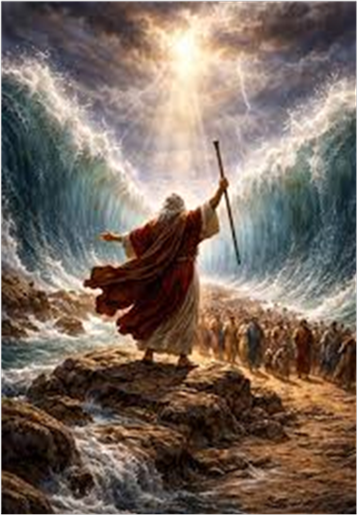
The account of Israel’s crossing through the Red Sea is quite stunning. Stuck on the western side of the Sea, crying out to God in anguish and despair, the people of Israel were in desperate straits. Pharoah and his armies had pursued them and all looked bleak…except for God. He had to act and He did – in a most powerful and amazing way – delivering His people through the Sea to safety. It’s good to reflect that when Jesus faced the awfulness of the wrath of God on the cross, He did not seek to please Himself, but when through what was before Him to bring us, His people, to safety.
Message
Outline
The Exodus event
God’s intervention!
Rescued!
Forest Street has been a busy place in the last few weeks with ongoing foothpath construction works being carried out the the City of Greater Bendigo… and access to our car park has been ‘off limits’ last week. Thankfully, however, all is in order for access again. Come join us as we meet for worship, learning, Sunday School, fellowship and encouragement at 10:30am on Sunday.

In Exodus 14:1-14, the people of Israel who have just departed from Egypt, find themselves in a very, very tricky situation. With Pharaoh and his armies in pursuit of them and impassable mountains to the left and the right, the people (who had been led clearly by God through pillar of cloud and fire) were sitting ducks! Naturally, their reolved and trust in the Lord fell apart. Any hope they had known was now gone. Any trust in the Lord was completely eroded. But God wasn’t finished yet. And all the people had to do was ‘stand still’ and ‘say nothing’ and God would do the rest!
Message
Outline
o The twelfth in this series
o More than exciting history
o Where we were last week
o Note how Moses tells us of …
Peter’s situation
God’s command to Moses
Salvation!