‘See the accusation against.. and the defence of… the Saviour’ (Luke 11:14-28)

When Jesus chose to heal a man from demon possession in Luke 11:14-28, he got much more than he was expecting in terms of opposition to his miracle. Those who observed the miraculous deliverance of the man, could only reach a conclsuion that was opposite to what might have been made by those with ‘two eyes’, attributing the miracle to the works of the evil one. But Jesus was not deterred and used the opprtunity to press His claims and to point out what responsing to Him the right way really means.

Message

Outline

• The thirty-fifth in this series
• Encouragements and discouragements
• Divided witnesses
• See how Luke tells us of …

  1. The ‘crime’ Jesus committed (v.14)
  2. The accusation they levelled (v.15-16)
  3. The defence Jesus gave (v.17-28)
    R
    S
    N

Courtroom drama
What’s your verdict?
Hearing and heeding…

‘See the teaching about prayer by the Saviour’ (Luke 11:1-13)

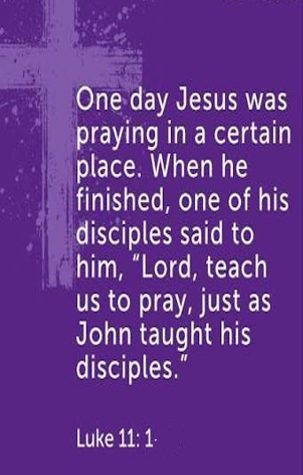
After Jesus had left the home of Marth a and Mary, the dfisciples observed Him (as was His usual custom) praying. They aked Him therefore to teach them to pray. In Luke 11;1-13, we find the respoonse Jesus gave them in which he laid down for them a pattern for prayer, encouraged them to be persistent in prayer and also encouraged them by reminding them that God the Father welcomes their requests. The challenge for us is not so much understanding what Jesus said, but doing what He said!

Message

Outline

• The thirty-fourth in this series
• Connecting back to last week…
• What the disciples observed about Jesus
• See how Jesus taught about…

  1. The pattern needed for ordered prayer (v.1-4)
  2. The persistence needed for effective prayer (v.5-10)
  3. The assurance needed for answered prayer (v.11-13)

The hardest thing to do?
Spurgeon’s comment
‘Teach me to pray!”

‘See the sisters who loved and served the Saviour’ (Luke 10:38-42)

In Luke 10:38-42, we find Jesus in the home of two sisters, Mary and Martha. Distinctions are often made between thse two sisters, and often the conclusion reached is ‘Be like Mary and don’t be like Martha, after all, Martha was too busy for Jesus and Mary wasn’t’. Maybe that’s right. Maybe it isn’t. Both sisters were busy. It’s just that their choices were different. Both loved and served Jesus and He was gentle and encouraging to both.

Message

Outline

• The thirty-third in this series
• Where we left off…
• A common (but incorrect) approach to the text?
• See how Luke wants you to note…

  1. The tension behind the busyness (v.38-40)
  2. The frustrations behind the outburst (v.40)
  3. The misunderstanding behind the accusation (v.40-42)

Balancing acts
The warning from Martha
Making the better choice

‘See the most well-known parable of the Saviour’ (Luke 10:25-37)

Many people can tell you what the Parable of the Good Samaritan is all about and what Jesus was teaching by it. However, many people can also take the parable in a rather simplistic fashion which makes it all sound ‘nice’, even sort of ‘ a good thing to do’. But Jesus meant so much more by this parable that is recorded in Luke 10:25-37 which follows a long section in which Jesus has been shaping and forming the minds and hearts of His disciples. In that sense, the parable therefore means far more that many might have thought!

Message

Outline

The thirty-second in this series

  • Where we left off…
  • Samaritans and Jews
  • See how Jesus told of the Samaritan’s compassion that was…
  1. Genuine and not ‘put on’ (v.30-32)
  2. Based on needs and not on worth (v.33)
  3. Not just words but costly actions (v.34)

This unsafe world
The law of God
The One who was truly ‘good’

‘See the disciples who went out to represent the Saviour’ (Luke 10:1-24)

While much of Luke 9 has been about the theme of discipleship, Luke 10:1-24 continues to follow that theme. When Jesus enlarged the number of His disciples from 12 to 72 (6 times as many!) and sent them out to represent Him wherever they went, this was a major challenge for each of them. They were to rely on Him, even though He was not physically with them, and yet the result of their witness was not only joy, but also confirmation of His victory over the evil one.

Message

Outline:

• The thirty-first in this series
• Those errant 12…
• Imperfect but still used!
• See how Luke tells us of …

  1. The method that Jesus employed (v.1-11)
  2. The unbelief that Jesus expected (v.12-16)
  3. The joy that Jesus (and the 72) experienced (v.17-24)
    The joy of
    The joy of
    The joy of

A story from the life of Genghis Khan
Jesus sent by the Father
Workers in the harvest field – sent by Jesus

‘See the would-be and wanna-be disciples of the Saviour’ (Luke 9:57-62)

The whole chapter of Luke 9 seems to be about discipleship and this is confirmed by the finanl paragraph of the chapter, Luke 9:57-62. here, Jesus meets people who ‘would-be’ His disciples – people He asked to come and follow Him, and those who were ‘wannabe’ disciples – those who came up to Him and said they would follow Him of their own accord. To both groups of people, Jesus gave some very telling and strong demands about discipleship. It’s never to be taken lightly, but involves cost and sacrifice and letting go of many things.

Message

Outline

• The thirtieth in this series
• Jesus training the 12…
• New applicants!
• See how the disciples of Jesus need to let go of …

  1. Earthly security (v.57-58)
  2. Earthly ties (v.59-60)
  3. Earthly distractions (v.61-62)

Australian Idol
What became of these would-be followers?
John Newton’s story

‘See the failures of the disciples of the Saviour’ (Luke 9:46-56)

The 12 disciples of Jesus were certainly a mixed bag – hot one day (think Peter saying ‘You are the Christ) and cold the next (think their argument on the road to the cross as to which of them was the greatest!). In Luke 9:46-56 it seems that some pettiness in their minds and hearts came to the fore and out of their mouths. Jesus must have felt burdened that they were so off the mark – just like we can also be. Thanks be to God that He wasn’t, but came ‘not to be served, but to serve and give His life a ransom for many’!

Message

Outline

• The twenty-ninth in this series
• Where we left off…
• Those disciples of Jesus!
• See how the text tells of the disciples’…

  1. Lack of humility (v.46-48)
  2. Lack of tolerance (v.49-50)
  3. Lack of compassion (v.51-56)

School report cards
Three ‘fails’
The One who passed with flying colours!

‘See the ups and downs faced by the Saviour’ (Luke 9:28-45)

When Jesus went up high on the mountain in Luke 9:28-36, the disciples saw His glory revealed to them by God the Father. But when Jesus came down the mountain into the valley in Luke 9:37-45, He immediately encountered the impotence of the disciples to deal with the situation at hand. Once he has dealt with that, Jesus went on to explain again that He would suffer and die. Although the disciples saw something of the glory which was to come, the cross would come too. Suffering. Pain. Loss. The path God the Father chose for his Son was difficult indeed. Suffering before the fulness of His glory.

Message

Outline

  • The twenty-eighth in this series
  • Luke’s presentation so far
  • Mountains in the Scriptures
  • See how the text tells of Jesus…

1. Up on the mountain (v.28-36)

    The

    The

    The

2. Down in the valley (v.37-45)

   He

   He

   He

How

What

Who

2 Peter 1:16-19

Chariots of Fire – Abrahams and Liddell

‘See the Saviour conquer death and the grave’ (Luke 24:1-12)

When the women went to the tomb early on the Sunday morning after the death of Jesus, they never expected to find that the tomb would be empty. The fact that the tomb was empty is recorded by all the gospel writers, even Luke in Luke 24:1-12. Perhaps there has never been a more important find of nothing! Because the tomb was empty, the New Testament tells us of some great truths that follow that should uplift the heartsof all God’s people

Message

Outline

• The overgrown tomb
• The story’s not over!
• The most important discovery of nothing!
• Consider how the empty tomb speaks and how it…

  1. Proclaims His divinity (Rom 1:4)
  2. Portrays His victory (Rev 1:17-18)
  3. Prepares our eternity (Rom 8:11)
  4. Previews our immortality (John 15:19)

Has the resurrection been disproved?
‘Pie in the sky when you die’
Hope in an uncertain world!

‘Following Jesus Christ’ (Luke 9:18-27)

Guest preacher and theological student, Daniel Hitchcock, spoke from Luke 9:18-27 about following Jesus. He asked his disciples who the people said he was and many were still perplexed. Then Jesus asks the disciples and Peter gets in right, “The Christ of God”. Jesus surprises as he explains what it means to be God’s chosen saviour and what it means to follow him. He knows he is going to the cross to suffer for our sin in our place. Following him through suffering sounds discouraging but the eternal reward is worth more than the whole world.

Message

Outline

  • Taking up your cross sounds hard
  • The secret of the Christ
  • Fulfilling prophecy (Isaiah 53:1-12)
  • Deny yourself and gaining forgiveness